
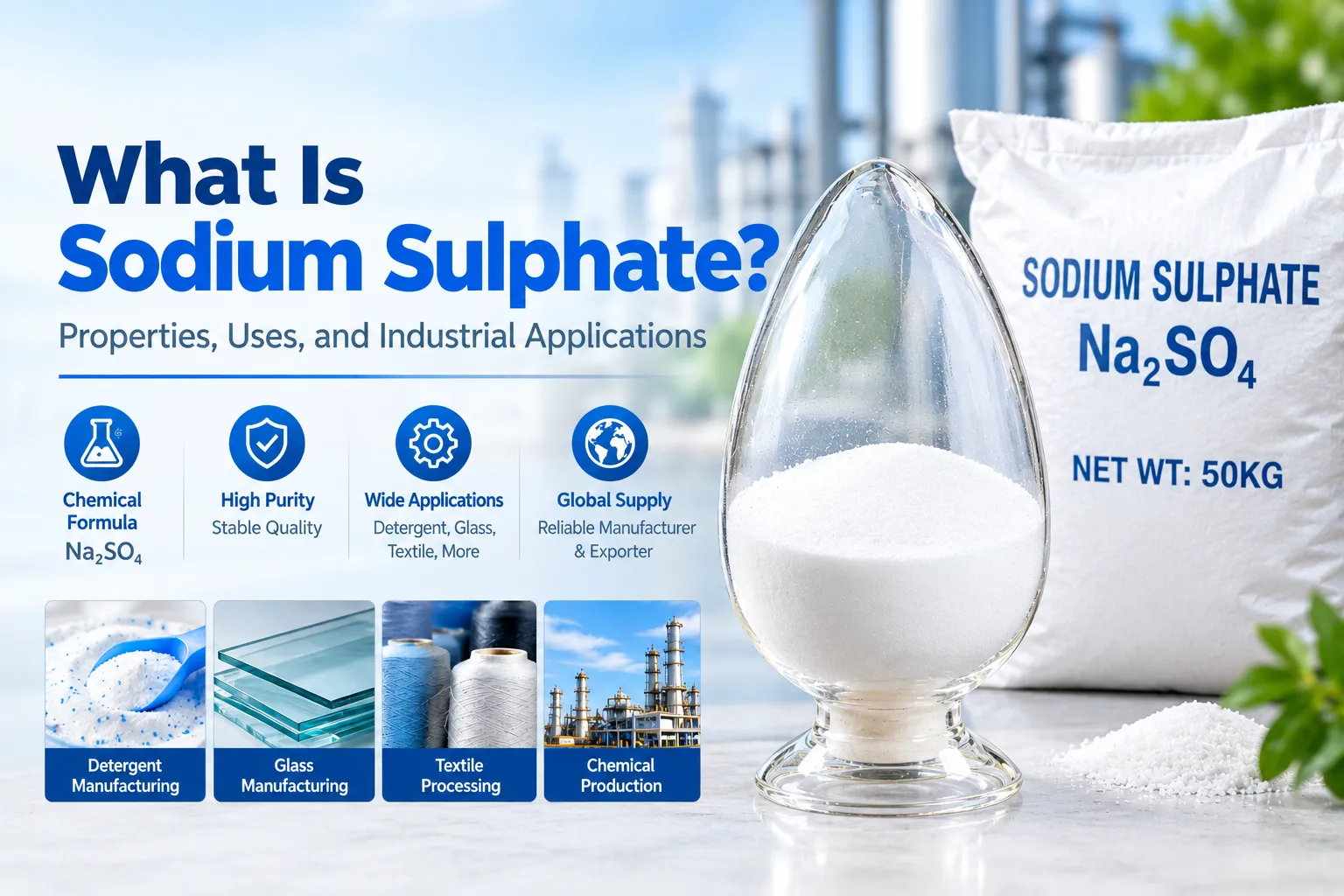
Sodium sulphate is an important inorganic chemical widely used in detergent manufacturing, textile processing, glass production, and various industrial applications. Due to its chemical stability, water solubility, and compatibility with different industrial processes, it is a valuable raw material for manufacturers around the world.
For buyers and industrial users, understanding the properties, grades, and applications of sodium sulphate helps ensure the right product is selected for specific production requirements.
In this article, we will explain what sodium sulphate is, its chemical properties, major industrial uses, and the key factors to consider when purchasing it from a supplier.
1. What Is Sodium Sulphate?
Sodium sulphate, also spelled sodium sulfate, is an inorganic salt with the chemical formula Na₂SO₄. It consists of sodium ions and sulphate ions and typically appears as a white crystalline solid or powder.
Anhydrous sodium sulphate contains no water of crystallization, while sodium sulphate decahydrate, commonly known as Glauber’s salt, contains ten molecules of water per formula unit.
Sodium sulphate is widely used as a processing aid, filler, and raw material in several industries, particularly in the production of powdered detergents and glass.
Basic Information About Sodium Sulphate
- Chemical name: Sodium Sulphate
- Chemical formula: Na₂SO₄
- CAS number: 7757-82-6
- Appearance: White crystalline powder or granules
- Molecular weight: 142.04 g/mol for anhydrous sodium sulphate
- Solubility: Soluble in water
- Main applications: Detergents, glass manufacturing, textile processing, and chemical production
2. What Are the Properties of Sodium Sulphate?
Sodium sulphate has several physical and chemical properties that make it suitable for industrial applications.
Physical Properties
Anhydrous sodium sulphate is generally a white, odorless solid. It is stable under normal storage conditions and dissolves in water. Its particle size, purity, moisture content, and bulk density may vary depending on the production process and product grade.
Chemical Properties
Sodium sulphate is a neutral salt formed from sodium and sulphuric acid. It is generally stable under ordinary industrial conditions and does not readily react with many common materials.
However, its suitability depends on the specific process, temperature, concentration, and other chemicals present.
Anhydrous Sodium Sulphate vs. Glauber’s Salt
The main difference between these two forms is their water content.
- Anhydrous sodium sulphate: Formula Na₂SO₄; commonly used in detergent formulations and industrial processes.
- Sodium sulphate decahydrate: Formula Na₂SO₄·10H₂O; contains ten molecules of water of crystallization and is also known as Glauber’s salt.
When purchasing sodium sulphate for industrial use, buyers should confirm which form is required.
3. What Is Sodium Sulphate Used For?
Sodium sulphate has a wide range of applications across different industries.
3.1 Detergent Manufacturing
One of the largest traditional applications of sodium sulphate is in the production of powdered laundry detergents.
In detergent formulations, sodium sulphate is commonly used as a filler and processing aid. It helps adjust the bulk composition of the finished product and can contribute to powder handling and formulation consistency.
Its performance depends on the detergent formulation, surfactant system, and required product specifications.
For detergent manufacturers, important purchasing parameters include sodium sulphate purity, moisture content, whiteness, particle size, and water-insoluble matter.
3.2 Glass Manufacturing
Sodium sulphate is used in glass production as a refining agent. Under appropriate melting conditions, it can help remove gas bubbles from molten glass and improve the refining process.
It is used in the manufacture of various types of glass, including flat glass and container glass, depending on the production process.
For glass manufacturers, the chemical composition and impurity levels of sodium sulphate are important because certain impurities may affect the color and quality of the finished glass.
3.3 Textile Industry
Sodium sulphate is used in textile dyeing and processing, particularly in certain dyeing processes involving reactive dyes.
It can promote dye exhaustion by helping control how dyes interact with textile fibers. The amount required depends on the dye system, fabric type, and processing conditions.
Textile manufacturers should select sodium sulphate that meets their requirements for purity, consistency, and soluble impurities.
3.4 Paper and Pulp Industry
Sodium sulphate is associated with the kraft pulping process, where sodium-containing chemicals are recovered and reused in chemical recovery operations.
Its role in this industry differs from its use as a direct additive in detergent or textile formulations.
3.5 Chemical Manufacturing
Sodium sulphate can serve as a raw material or processing chemical in various industrial processes. Its suitability depends on the specific chemical reaction and required purity.
4. What Are the Different Grades of Sodium Sulphate?
Sodium sulphate is supplied in different grades according to purity, impurity limits, physical form, and end-use requirements.
Common commercial categories include:
Industrial Grade Sodium Sulphate
Used in applications such as detergent manufacturing, glass production, and other industrial processes. Specifications should be selected according to the needs of the application.
Detergent Grade Sodium Sulphate
Typically selected for powdered detergent production. Buyers may prioritize purity, whiteness, moisture content, particle size, and water-insoluble matter.
High-Purity Sodium Sulphate
Used where tighter chemical composition or impurity limits are required. The exact specification should be agreed upon between the supplier and buyer.
Not all suppliers use identical grade classifications. Therefore, buyers should compare the actual technical data sheet rather than relying on the grade name alone.
5. How to Choose a Reliable Sodium Sulphate Supplier
Selecting the right supplier is important for maintaining production stability and controlling procurement costs.
Before placing an order, consider the following factors:
Product Specifications
Confirm the sodium sulphate content, moisture, water-insoluble matter, particle size, and other relevant parameters. The required limits will depend on the intended application.
Product Form
Determine whether your production process requires powder, crystals, or granules. Particle size and flow characteristics can affect handling and mixing.
Quality Documentation
Request a technical data sheet (TDS) and certificate of analysis (COA). For regulated or specialized applications, confirm any additional documentation required.
Packaging Options
Common packaging options include 25 kg bags and larger bulk packaging, depending on supplier capabilities and customer requirements. Packaging should protect the product from moisture during storage and transportation.
Supply Capacity and Delivery
For regular industrial consumption, assess the supplier’s production capacity, consistency between batches, lead time, and export experience.
Export and Shipping Requirements
International buyers should confirm the agreed product specifications, packaging, shipping terms, destination requirements, and necessary export documents before placing an order.
6. Frequently Asked Questions About Sodium Sulphate
What is the chemical formula of sodium sulphate?
The chemical formula of anhydrous sodium sulphate is Na₂SO₄.
What is the CAS number of sodium sulphate?
The CAS number of anhydrous sodium sulphate is 7757-82-6.
Is sodium sulphate soluble in water?
Yes. Sodium sulphate is soluble in water, although its solubility varies with temperature.
Is sodium sulphate used in detergents?
Yes. Sodium sulphate is widely used as a filler and processing aid in powdered laundry detergent formulations.
What is the difference between sodium sulphate and sodium sulfite?
Sodium sulphate has the chemical formula Na₂SO₄, while sodium sulfite has the formula Na₂SO₃. They are different chemical compounds with different properties and applications and should not be treated as interchangeable products.
How should sodium sulphate be stored?
Store sodium sulphate in a dry, well-ventilated area in sealed packaging. Protect it from moisture and contamination, and follow the supplier’s handling and storage recommendations.
7. Conclusion
Sodium sulphate is a versatile inorganic chemical used in detergent manufacturing, glass production, textile processing, and other industrial applications. Its suitability for a particular process depends on the required purity, moisture content, physical form, and impurity limits.
For industrial buyers, reviewing the technical data sheet, confirming application-specific specifications, and working with a reliable supplier are important steps toward maintaining consistent production quality.
If you are sourcing sodium sulphate for detergent manufacturing or other industrial applications, contact Weifang Changs Chemical Industry Co., Ltd. to discuss your product specifications, packaging requirements, and supply needs.